Showing posts with label Brummett's mustache is AWESOME. Show all posts

Thursday, May 14, 2009

Card Check Zombies: The Thing That Just Won't Die

On the morning of April 6, 2009, most thought that the Employee Free Choice Act had sustained fatal injuries near the Governor's Mansion, as U.S. Sen. Blanche Lincoln announced that she would vote 'no' on the issue in 'it's current form.' With there being little real discussion of a compromise, outside of the gripes from labor, and Specter's same decision, it looked like the killing blow had been delivered.

But this issue just. Will. Not. Die.

On the Right, Republicans are poised ready to mount an offensive against Lincoln on the issue, not because she's voting against it — which I'm sure they appreciate — but because it took so long for her to come to this decision, claiming that it shows her to be a mere bureaucrat who will do anything for a vote, and not really connected with the people of the state. More on those people in a bit.

I wrote an article about the state GOP's plan to do so about a week after Lincoln gave her two cents. It goes into greater detail, but basically, she was in a Catch 22 to begin with, which is often the nature of the political beast.

But the Left is beginning to move as well.

As recently as this past week, the Wall Street Hoover Blanket and Politico have both reported that officials are beginning to heat up the conversation about a card check compromise. Joe "Did I say that?" Biden, who according to Arlen Specter is "mighty persuasive," has renewed his push for card check just yesterday.

Our very own Sen. Pryor first began the discussion about the possibility of a compromise, even before Lincoln supplxed it, likely after a meeting with the Arkansas AFL-CIO and other labor folks.

But speaking with a Pryor aide, even they will admit that this thing is "dead," especially in Arkansas.

Looky here! A survey! The Political Firm, a political consulting group from Louisiana and here in Little Rock, conducted a telephone survey of 400 likely voters on both sides of the aisle, 38 percent Democrats, 33 percent Republican and 26 percent independents.

The sheer numbers are pretty clear cut: Arkansas is right-to-work for a reason, as nearly 65 percent oppose and 22 percent support card check. Breaking it down further, you can see that 52 percent of those polled strongly opposed it, while only 12 percent were strongly for it. The whole breakdown is here (UPDATE: Link fixed), but even with an obligatory five percent margin of error, it seems to be pretty firmly against card check.

This is what everybody already knew, and this is what everybody already knows. That dog just won't hunt in Arkansas.

Tuesday, April 7, 2009

Overlord Give Newsing Media Make Glorious America? Hail the Overlord!

As reported by several in the field, I spoke on a panel at the Society of Professional Journalists this weekend to discuss new-fangled media and what to do about it with old-fangless media strategies.

It went well. There were was an encouraging amount of interaction between the panel, admittedly old-school journalists, Journalism Professors, and students.

I say it went well, although the question persists, but no one walking into that room thought anything would be resolved. One question, from our moderator, the Demozette's John "Supa" Krupa, unnerved me a little bit. I hadn't thought about it until I saw the question in writing before the gig was set to launch.

"Do you think the government should subsidize or 'bail out' newspapers?"

I think I wrapped up that question quickly and then yielded my time to Conan "Cannon Galaxy" Gallaty and this other guy. But I began to wonder later that day if people had actually been mulling this idea around.

The answer to this has to be no. The answer to this has to be H-E-double hockey sticks no.

I spoke briefly and most boringly about taking steps backward philosophically to figure out what it truly means to be a distributor of information and what it means to be a journalist.

I have always thought, even before landing bass-aackward into this job, that one of the most important roles a newspaper (and even the news without the paper-attachment) could play was that of the foil to government. It is, in my humble opinion, a necessary check and balance.

This is an often quoted, and probably ill-referenced example, but Watergate worked through a newspaper. Woodward and Bernstein brought down a now obviously corrupt executive branch. That's a clear example. But delivering information does more than just topple the oppressive. It serves as a political conduit. Politicians and constituents alike gauge on another, often, by what they read about one another in the paper.

And a paper will never write anything that impugns its owner. Ever.

Whether or not the news comes on gray paper with smudgy ink isn't the issue for me. Like Michael Kinsley said in the Washington Post, it's all going to be alright. People will figure out how to monetize the news.

That being said, the news businesses, including our own, will need to innovate these ways to monetize quickly, or be lost along the wayside. But government ownership — and that's what it would be, ownership; not Stephens Media or Gannett, but United States Media or Government — would pose such a tremendous conflict of interest that it would border on making this blessed service news provides and turning into propaganda.

Anyway, I read the press releases from government officials. They're lousily written.

Wednesday, March 11, 2009

Rigor and Reward

Heads Up: Since it's South Park, there are two instances of naughty language, so if you're watching this on the House floor, or at a daycare, turn the volume down.


Yesterday, President Obama made an announcement regarding education and his vision for it in America.

It sounds great. And here's the kicker, he's right about nearly everything.

Here's where he's right: We need to make sure our students aren't falling behind, as compared to international standards. We need to get better about accountability and not let grades slip any more. We need to tighten the bolts on students, make the material more rigorous, and push them to succeed. And we need to pay teachers more.

Then Obama offered this notion: To pay teachers according to how well their students perform.

On the front end, you're thinking "Hey, that's pretty good! If a teacher is doing well, they should be paid well. If the teacher is encouraging and molding these young minds to get good grades, they ought to be rewarded. PLUS! It provides an incentive for the teacher to work harder to get their students to achieve more. Golly!"

Hopefully the documentary I provided might have enlightened some to question how this method of rigor and reward might play out.

Luckily for the journalist, suspect grade inflation was discussed at length in the Natural State as recently as last week.

My best good buddy in the whole wide world, columnogger Johnnie "JRay" Brummett, showed an apparent gaffe in the new-fangled state lottery requisites. He showed a list of "grade-inflaters" — schools that were easier to attain better grades. That's not me saying that 64.5 percent of kids in the Earle School district have bogus grades: That'd be the state Education Department.

If we're awarding teachers based on the performance of their students, the teachers in Earle would be sittin' pretty while the faculty of the Glen Rose School district in Hot Springs County, which has 65 students with a B average or higher and zero students with inflated grades would still be underpaid.

And what's to stop some That doesn't add up to me, either.

I get and applaud what the President is trying to do here. We must reach these kids and providing teachers adequate compensation is a wonderful start. But at the end of the day, Mr. Cartmenez's aforementioned question still remains: How do we reach these kids?

President Obama has yet to respond. Hopefully he will, if he's as serious and sincere about education reform as we should all hope he is.

Tuesday, March 10, 2009

LaborLady Strikes Washington!

Just a quick note that we here in Arkansas aren't the only ones getting fired up over this whole Card Check business.

As you can clearly see, this woman (Yes, this is a woman) has been driven quite mad by the entire thing.

In all actuality, Arkansas is being shoved into the national spotlight for reasons more interesting than former state representatives procreating at questionably and forehead-slappingly high levels.

The Wall Street Cardboard Scrawl is reporting that Lincoln and Pryor, a cajun, and a man with an unfortunately difficult name may be the fab four that bring this EFCA bill down.

The only reason I find this mildly entertaining is that it takes my mind off of the harrowing economy, and there's nothing better than watching a politician dangle in the wake of re-election, a la Lincoln. We'll see how it all pans out.

Whatever, I'm over it.

Thursday, March 5, 2009

House Rules Committee (Verbally) Bludgeons AG McDaniel in the Head Repeatedly


The Gauntlet: She has been thrown.

News of Attorney General Dustin "The Dog Whisperer" McDaniel and his ethics reform bills spread like wildfire throughout the legislative halls. McDaniel's announcement of the twin bills, one to offer a "cooling off" period of a year to former legislators before they can get back into the legislators via lobbyists and another that makes legislators pay for food that they eat, came around the noon hour.

Shortly thereafter, a verbal fracas erupted, sending all those involved to the capitol nurses' offices for hot towel treatments,
Flintstone vitamins, and even a thermometer for one of the legislators involved.

Rumor has it that as soon as the news broke from the AG's office, the House Rules committee, who is expected to deal with the ethics package once it takes the cakewalk through the Senate, kicked the doors to the office in, and in a very choreographed, and very deliberate way, began to verbally beat McDaniel until he could hardly put out a press release.

The committee, apparently after taking a short break following their choreographed number which provided "super intimidation," according to committee member Steve "The Bod" Harrellson, verbally ganged up on McDaniel to let him and his buddies know that nobody messes with legislators and their lunches or their potential lobbying careers.

(While chewing gum loudly) "You know, it's just stupid, ya know?" said an obviously frustrated Gregg "Don't Fear the" Reep. "I mean, I'm term limited, dog. I need a job after I get done with this. And I gotta eat. AM I RIGHT OR AM I RIGHT?!" Reep then used a capitol coat rack as a javelin and threw it through McDaniel's pick-up truck windshield, before starting a slow clap with the rest of the committee members.

Rep. Barry Hyde, D-Dogtown, said he'd had enough, but couldn't remember why.

Rick Saunders kept the perimeter secure during the entirety of the verbal fisticuffs, while holding a 40 pound boom box over his head, blaring Guns N Roses'
Welcome to the Jungle.

"No more Miss Nice Gal," declared Kathy Webb. She then began to sternly dictate a House Concurrent Resolution entitled "Dustin McDaniel is a Big Stupid Dummy Who is Bad at His Job and Smells like a Foot," and filed it shortly after.

The bill is expected to sail through committees and chambers and is to be signed by Gov. Mike Beebe in a press conference as early as next Tuesday.

The sole Republican on the committee, Rick Green, R-Van Buren, was the only person who was uninvolved in the communal verbal thrashing. For partisan purposes, Green was asked by the committee to not get involved, but was allowed to quote "stand off to the side, and tremble with a real mean look in his eye, like he was the really crazy one of the group, because every group has THAT guy."

(While simultaneously flexing his calf muscles and dipping an entire can of Skoal)"AM I RIGHT?! AM I RIGHT?! GREEN IS CRAZY! AM I RIGHT?!" confirmed Gregg Reep again, starting yet another slow clap, then tying a black skull-and-cross bones bandanna around his head.

No comment from McDaniel, but he is said to be holding up well at the duplex of Sen. Steve Faris' in Malvern. Faris is carrying one of the bills in the Senate, and has assured McDaniel's safety from more verbal taunts.

Sen. Gilbert Baker, R-Conway, who is also carrying one of the ethics bills, offered to take McDaniel in, but his neighbor, Conway native Robbie Wills, said "Nah dog. Not in my house. Not in my house," and allegedly and verbally tossed a boutonniere-shaped brick through Baker's front bay window.

More on this story as it doesn't develop.


-----------------------

So apparently, McDaniel is trying to get these ethical matters put to rest through legislative discourse. Conflict of interest is a big deal, after all, and even if there is none with these legislators or commission members-turned-lobbyists, or their meals on wheels, hadn't we at least discuss it?

Like in a committee? I'm not saying I'm for or against the bill, as it hasn't been fully considered yet. How can these leaders who say — before a bill has even been filed, mind you —that it's all going to be D.O.A.?

Just my two cents, but in order to be transparent, the unsettling feelings that surround these instances at least deserve...I don't know.... respectful consideration?

Thursday, February 19, 2009

"Education" Lottery Indeed


The big news around the Capitol is this business concerning the new-fangled lottery, and who ought to be disbursing the fund therein. Is it a state agency? The legislature? An oracle who is only used every once in awhile, and while omniscient, also wields disastrous fates for those who dare call on her wisdom?

The answer is that nobody really cares, so long as the proper amounts are sent through the proper channels and the money ends up where they say it's going to end up: In the pockets of worthy students seeking to further their education.

But that's the most important facet and of the literally dozens of articles published from various news outlets and of the mouths of legislators and political leaders rarely mentioned: The education.

This lottery was set up for the sole purpose allowing Arkansas students the financial wherewithal to attend a college or university (preferably in-state, nudge nudge), regardless of their income. If a student has a 2.5GPA, they should have the ability to go to college, I heard legislators say. I couldn't agree more.

There's a reason for lack of a discussion of education in a lottery dedicated to it: Education in Arkansas is sitting relatively pretty.

No, really. It is. I know this may come as a shock to my interstate readers, those in the Leno crowd and all. And sure, there are some questionable, backwooded areas of the Natural State with a high proclivity toward an excessive amount of toes, unbeknownst to the keepers of these phalanges, as they have difficulty counting numbers higher than twelve.

But I digress.

In fact there are several reasons for this, but the critical point is that legislators should thank their lucky stars that they don't have such an encumbrance in the first place. Like Arkansas' good standing with regard to its economy (tremendous tax hike or not), it's something that many people — 40 other states, fact — wish they, too, could claim. A couple of reasons why:

First, public schools. Arkansas has made strides, rising to tenth in the nation in public education. Take that, 80 percent of the country. You've just been beaten by Arkansas in the spelling bee, per se.

You hear about the public schools in counties neighboring Pulaski county as being top notch, the source of great pride for the respective cities. The only town in Arkansas to don the moniker "boomtown" according to a nationwide survey was Cabot, AR. I spoke personally with the current mayor and the former mayor during the middle four years of the survey, and both were quick to credit, you guessed it, the schools as the primary draw to their community.

Established universities like the U of A establish new ways to learn for those with deficiencies or debilities, as the Bureau's sports columnist, Harry "Father Time" King reported last month.

Speaking of debilitated, school districts that had been declared fiscal disaster areas, like Clinton and Bismark, were able to pick themselves up and get about the business of straightening themselves out, benefiting their students most importantly.

My primary concern throughout the lottery and scholarship discussions regards the retention of students who would receive these scholarship funds, basically a concern of whether or not this lottery is indeed helping students achieve their desired degree. That's the point of this, after all, isn't it?

The retention numbers of the state are grim, at a substandard 18.2 percent. But the Southern average is only 27 percent, a number for which there is an entirely separate task force strategizing to achieve. Even amidst a dark cloud, there seems to be a silver lining. As a friend of mine from Texas claimed, "If college retention is your biggest problem, you're headed in the right direction."

I saw a comment on another blog where someone was still lamenting that there was a lottery, in fact saying that as long as the church had a say, there'd be no lottery. That ship has come and gone. The lottery is here. It's something that needs to be vetted, mulled over, discussed, debated, all of that fine politickin'. But it should be mentioned that this process is made that much better and easier by having a quality education system in place.

Now I don't want to boost anyone's ego too terribly much. That'd just be foolhardy. The education in Arkansas isn't where it should be, where it could be. We've still got a long way to go before the stereotypes against an intellectual Arkansas are no longer fulfilled on a daily basis to be paraded in the national spotlight.

But at least we're not as far off as we could be. This lottery deal is a reflection of that; It is a profitable means to a worthy end.

That's it. No catch. Just a compliment or two. Arkansas deserves some credit here and there.

Monday, February 16, 2009

Oh, I Thought Your Seat Belt Wasn't On...What's In the Trunk?


A bill is currently advancing through the Arkansas Legislature that irks me on various levels for varying reasons.

Senate Bill 78 would make the act of not wearing a seat belt a primary offense, meaning that they can be pulled over for that reason and that reason alone. Right now, one can only be given a ticket if they are already pulled over and have previously failed to click it.

So if I'm flying down I-30 headed to God's Country, Saline County, Arkansas at about 73 miles per hour, and a police officer sees that my seat belt is not fastened, bingo. I'm pulled over and may be issued a ticket, if the officer claims that I, indeed, was not wearing the seat belt that I indeed fasten every time I drive, mostly out of sheer reflex — my father was and is still a stern advocate of buckling up. And he's a rather large fellow who could crush most men, and most certainly a growing boy, with his bare hands.

My first point of ire was the same as Senate Minority Leader Denny Altes, R-Fort Smith. “How are you going to be able to enforce this law?”

State Police Director Col. Winford E. Phillips, speaking for SB 78, said very plainly that an officer would have to see the violation first, and if he cannot see that the seat belt is being worn, he (or she, ahthankyou) has no reason to stop the car.

How is an officer supposed to be able to hawkeye a driver's left shoulder to determine whether or not they're wearing a seat belt? It just doesn't seem feasible unless one is in a congested area, like downtown or something.

But I'm rather concerned with that other point: The reason.

An officer must have good cause or reason to pull someone over. You swerved, you sped, you tossed your slushie cup, what have you. Police officers have a lot of latitude to say whether or not someone has done these things, and understandably so. There's no telling how many lives have been saved by officers getting swerving drunks off the road and in jail where they belong.

But might law enforcement officers be granted undue latitude with this law? It's based, after all, with what they perceive, not an act that might be verified by any other number of means, like a swerving man might knock over a trash can, or pop a curb or something. With this, it's mere appearance; it looks like that guy might not be wearing a seat belt, and the sirens blare.

Many will be quick to jump this commentary as that of an anarchical alarmist — someone who is ever-fearing the heavy hand of the Man, and swift to accuse police of brutality, racism, and any other vice that seems often contrary to common sense. That is not the case. I know many, many police officers and many, many of them are fine upstanding individuals who would never dare to do such things.

But why bring up the question? Why even allow the idea in people's minds? I asked a colleague of mine one time whether or not he thought Hillary Clinton's being married to Bill, who went around collecting money from other nations for his charitable fund, created a conflict of interest. He replied that in actuality no, it didn't matter but that that didn't matter; there was a newfound reason to be suspicious.

I don't think that police will be more inclined to do dastardly deeds, but I'd rather them not be under more scrutiny therein.

And how many more lives are saved by pulling over numerous people who may in fact be wearing their seat belts? How many people swerving drunkenly, undetected by police officers who have someone pulled over because of their safety belt? There are a gamut of questions that would need to be rectified.

I don't think I'll have to spend too much time thinking about it. I believe police do — and rightfully so — have bigger fish to fry.

Thursday, February 5, 2009

Electoral College? Is that a technical school or somthin'?


You'd be hard pressed to find a lot of people 'round these parts who can give you a clear cut definition of what the Electoral College is, and it's only once in a blue moon — like the year 2000 — when the E.C. actually does anything worth mentioning.

But when it is noteworthy, get out of the way because mass hysteria and rioting are about to ensue.

People are all riled up about it now that a legislative committee in Arkansas has endorsed a bill to do away with the pesky Electoral College once and for all, joining the ranks of legislative powerhouses Maryland, Illinois, New Jersey, Old Jersey and last but not least, Hawaii (!!!) who have passed similar bills.

The fuss is that people think that their vote is watered-down or doesn't count for as much, just because their vote seems to evaporate if — gasp! — their candidate doesn't win. It might appear to water down and somewhat encumber the democratic the process a little, but it is a necessary insular.

I'm reminded of a quote I heard from my friend and yours John Brummett, who was quoting Benjamin Franklin. "Democracy is akin to two wolves and a sheep sitting down at a table to discuss what's for dinner," or something close to that. This means that direct democracy doesn't adequately represent the interests of all of the parties involved, namely the minority.

The Electoral College doesn't offer that either, but it's at least closer than direct democracy. What we live in is a Democratic Republic. We elect representatives that cater to our specific constituent needs rather than just let the government en masse deal with our focused nit-picking.

We have three whole levels of representation — a bicameral legislature with a House and Senate, and then an executive branch with a president — all with different constituency populations and term-lengths and limits to ensure that your very needs are heard and guarded with the utmost care.

Now this Electoral College was put in place to safe guard that representation, although it's a bit more difficult to see in this ever-shrinking community that we live in called the United States. Surely one can recognize that there are larger cities and smaller cities within bigger states and smaller states. There are very different needs for these different geographic regions of population.

Maybe a large city like New Orleans is all about raising taxes to fund levies, while a small city in Montana wants to lower taxes so people will have more money to purchase firewood to keep warm. Different constituencies, different needs from their government. I'm sure you can think of better examples.

The founders were rightly concerned that the race for the Presidency could be skewed by a candidate focusing on one demographic over another by focusing on larger populations; hey, more hands to shake with less ground to cover. The Electoral College attempts to ensure that some of the hands in some of the smaller states at least get a fair shake. The needs of New York or Los Angeles aren't the same as, say, Goose Knuckle, Mississippi, or any other remote and odd-named locale in the middle of the country.

The Electoral College is there to make sure that the trailer-dweller from rural Arkansas' voice can be heard through six votes from the College rather than hope that the Presidential candidate gets to his issue that could sway his single vote out of a billion.

Proponents of the elimination of the College make two pretty good points. One is that the globalization of the country has made the need to physically be on the ground in every state less of an imperative, that everyone's voice can be heard from the youtubes or the blogosphere or whatever the next communication fad will be.

They also argue that it doesn't matter, their voice is still insignificant. In 2008, Obama never set foot in Arkansas, or much anywhere else in the deep South, knowing it was long gone. In every election down the home stretch, certain states, like Pennsylvania or Ohio in 2008, are visited more frequently as battleground states.

Doing away with the Electoral College won't grant that these people will be better represented, just that their vote will be one of now hundreds of millions rather than just a couple million, as is the case in Arkansas. Oh yeah, that should help get your voice heard. Just increase the pool by a couple hundred million.

Those against the Electoral College also hang their hat on the 2000 election, where Gore won the popular vote (like in LA and NYC) and Bush won the electoral vote (more states like Bush than Gore).

Person to person, Gore should've won. But constituency to constituency, demographic need to demographic need? Bush won. Thinking about it in that context — and neglecting the...uh...unfavoribility of Dubya — makes the denial of direct democracy seem less treasonous and more American than initial instinct would lead one to believe.

People fear what they don't understand and unfortunately no one seems to grasp the benefits of the Electoral College. If it's gone, look for everything between LA and New York to have a tremendous drop in voting value.

Tuesday, February 3, 2009

It's a new GOP, baby


From the desk of The Full Ginsburg, apparently a group of politically-inclined parody writers, sent to me from UFWAW.

Also, it seems that our UFWAW made good on his insider-information about the acceptance of Republican Senator Judd Gregg into the bowels of the Obama White House. UFWAW reported a bit of irony, when in '95 Gregg called for the dismantling of the very department he now heads, but that's all in the past. It's a new GOP now, baby, one that is all about bipartisanship, holding hands, and gettin' to gettin' along.

While I'm certain this new "trend" is going to get off the ground about as well as a brick armchair, we get to wait a couple of years — 2010 Senate elections — to see if my prognostications hold any water with this Gregg deal. I'm rigid with anticipation, as I'm sure you are.

Thursday, November 6, 2008

The Palin Pick: Asset or Liability?


Hindsight is certainly 20/20, but in a lot of cases what requires perfect perception is not so much how one sees the outcome but the event transpiring.

John McCain lost the Presidential Election of 2008, as expected. But did he lose it in spite of or due to the biggest curveball of the entire election season? The curveball to which I am referring is Alaskan moose enthusiast Sarah Palin, of course. But the question is whether or not the pitch was a strike in McCain's favor or ball four with the bases loaded that sent Barack Obama to home plate.

I like baseball metaphors. Sue me.

Now, it's obvious that Palin couldn't have helped McCain that much, he did after all suffer a defeat. But looking at where she came from, who she became in the national spotlight, and then what she is today paints a very unique portrait of the Alaskan Baracuda. If not a portrait, a caricature anyway.

One of the reasons for Palin's preliminary potency was the relative obscurity from whence she came. From Wasilla, Alaska to the national spotlight in two years is break-neck speed. Her down-home charm was nothing but appealing. She seemed just like every other soccer mom you see on the weekends, except for her obvious aesthetic values. In lay men's terms, she was a fox, la renard, Babe-raham Lincoln, and a refreshing sight on the rigid arms of McCain.

She shimmered in the limelight. People had never seen anything like it. Among the incoherent ramblings of Romney, Huckabee, and Joe "Who Am I?" Lieberman, Palin came in from left field on a frozen rope. This fresh face was more than unexpected, she was inconceivable. She completely eradicated any semblance of a post-convention bounce that Obama was surely expecting. She dazzled the most casual observers as well as the most invested pundits.

Then the luster faded.

Staunchly conservative, she solidified an overstatedly maverick platform that needed no solidification. For nearly two years, McCain had postured himself to look more conservative than his Senate record indicated. He did so in order to secure the primary nomination that had eluded him in 2000 for that exact reason. But following his subsequent nomination, he kept pace with the new-McCain, who was far more conservative than the old-McCain and the attitude of the rest of the country.

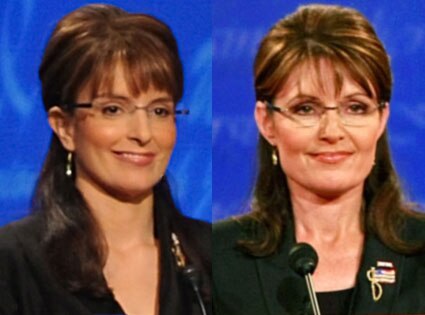
Then came Hollywood. In no way am I advocating for the advancement of Hollywoodian political theories from the likes of Diddy, Lohan, or The View. But when the entire country is dog-piling on you, those are often the most clearly verbalized voices. I've often theorized that the writers at Saturday Night Live must be some of the brightest minds in the country, as it seems they are often the first one's to point out key character flaws in some of our most prominent politicians (see Gerald Ford, George H. W. and George W. Bush...Clinton was too easy). Tina Fey's striking resemblance to and dead-on impression of Sarah Palin revealed a lack of substance that had otherwise been unmentioned up until that point.

It's pretty bad when comedy writers don't have to add anything to one of your interviews and still receive a nation full of laughter.

Her interviews are part of what did her in. She was seen as a viable political candidate until she was skewered by the likes of journalism's playground bully Katie Couric, that bulldog. Speaking of bulldog, those hokey statements about canines wearing cosmetics and hockey mom's and Joe-Alcoholically-Dependent-Six-Pack or whatever that plumber's name was ran wafer thin after about eleven minutes. She was scored well in the swimsuit competition, but in the oral interviews, she fell down and out.

I'm reminded of a colleague's initial thoughts about the candidates' respective Vice-presidential selections. John Brummett is a columnist for the Arkansas News Bureau and Stephens Media, where I work. He's a great writer with a vocabulary for days, and from what I hear, an above-average tennis player. His Aug. 28 column talked about the strength of Joe Biden juxtaposed against the weaknesses of Barack Obama. One of the most telling passages from this column talks of Obama and Biden's experience:
They say that Biden, a four-decades member of the U.S. Senate, will help Obama by lending experience. That is to say that Obama, in his own right, lacks experience. Biden's selection invokes a contradiction: Obama presumes to offer a new kind of politics, yet his first real decision embraces the very oldest politics. - John Brummett
Good points. Biden seemed the perfect candidate for Obama for all the wrong reasons. In his Aug. 30 column, Brummett then compares McCain's veep choice to others made by victorious Presidential candidates of the past, namely weak choices like Agnew and Quayle. He also compares Obama's choice to pick a "strong" candidate as it pertains to a poor showing by those candidates who had taken that path previously:
History says Democrats ought to worry whenever they find themselves blessed with an able U.S. senator on the ticket and get word of a Republican vice presidential nominee they've never heard of and whose selection seems an affront to responsible governing. - John Brummett
For those of you keeping score at home, that means if a VP candidate is stronger than his running mate, that usually means bad news for the presidential candidate. This seemed to be the case when Brummett wrote these pieces in late August, as Biden seemed to be the clearly stronger running mate of the two.

But the Palin pick flipped that adage on its head. As Palin began to surge the airwaves and internet, she soon became a much bigger name than Joe Biden had ever been, despite his tendency to have a hazardously explosive comment or two. It no longer became Obama-Biden vs. McCain, as it was on track to be, but it became Obama vs. Palin, with McCain being a wallflower in his own Presidential race. Brummett's observant theory was right, but the variables were switched with McCain's pick.

End result: Obama wins. Was she an asset? Well, McCain didn't win. Was she a liability? Probably not, because as I've said before, this election has been the Democrats' to lose since 2005 and I thought they could have put up a much weaker candidate and still won. But a liability? Most would say "You betcha."

So what is she now, other than a former Vice-presidential candidate? Well she's still got her day job, governing Alaska, and many suspect she'll gain necessary executive experience to stay in the national spotlight in the GOP. But she may be forever marred as an inadequate candidate, a highly-publicized banner of defeat that silently clamors "Don't Pick Me."

Only time will tell how she might parlay her new found notoriety; to be famous or infamous, to be viable or dead on arrival.